


 All Customer Stories
Introduction
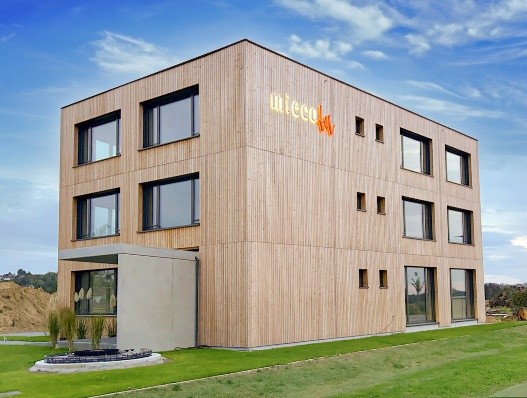
miecom-Netzservice GmbH is a medium-sized telecommunications company in Bavarian Swabia, a region in southern Germany. Since 2009, miecom has specialized in the planning, construction, and operation of fiber-optic infrastructure with the goal of providing comprehensive coverage throughout the region. The current network length exceeds 1,800 km. In line with its open-access strategy, the company leases fiber-optic connections to telecommunications network service providers. Current partnerships include M-Net Telekommunikations GmbH and Telekom Deutschland GmbH.
The Challenge
After laying the first fiber-optic cable in 2009, miecom quickly realized that the ongoing planning and operation of the growing fiber-optic network was not possible using standard office or CAD software. The available files, spreadsheets, and drawings were too unreliable and scattered. Furthermore, changes to the network could either not be traced at all or only with considerable effort based on the documentation. Therefore, in 2012, the strategic decision was made to procure a documentation system capable of continuously and scalably storing all network data necessary for the planning, construction, and operation of the fiber-optic network in a central system and making it equally accessible to all users.
The Solution
The decision to use VertiGIS ConnectMaster as the central network infrastructure documentation system was based on VertiGIS ConnectMaster’s extensive functionality for managing physical connections (fibers, splices, patches, physical paths) as well as its sophisticated geo-functions compared to those of competitors. Due to the small size of the network in 2012, no extensive initial data migration was required, and the network documentation in ConnectMaster could be continuously updated in tandem with ongoing network expansions.
To better manage the ongoing grid construction projects as well as the recurring changes to existing facilities – both in terms of planning and operations – the “Planning & Change Management” module was implemented in 2026. This is considered a significant step forward, as the “actual” grid remains available to the grid operations team regardless of the planning projects carried out in ConnectMaster. “When disruptions occur, we cannot afford to have the operations team spend valuable time – time we want to invest in resolving the disruption – clarifying unclear grid issues,” said Joachim Geiger, Head of Technology at miecom.
The Result
Currently, a technical team of four people works continuously with VertiGIS ConnectMaster. The leased physical fiber-optic paths are each marked in the documentation with a code that uniquely identifies the network service provider, network service, and end customer. This makes it clear, in the event of outages or planned work, which partners and customers need to be notified. The “Impact Analyzer” module is an indispensable tool for this purpose, as is the “Autorouting” functionality for identifying new fiber paths. With the network’s continuous growth, VertiGIS ConnectMaster has increasingly established itself as a central data source. “The fiber-optic network is our most important asset for business success, and VertiGIS ConnectMaster provides a stable, reliable database of the network for nearly all key business processes,” adds Mr. Geiger.
Outlook
The increasing network size and growing number of projects and operational tasks require further standardization of planning and construction projects, as well as the harmonization of workflows. VertiGIS ConnectMaster offers capabilities for creating project type templates and configuring project workflows, which are to be analyzed, configured, and implemented in collaboration with the VertiGIS Consulting Team. Joachim Geiger, Head of Technology: “Our goal is to make our network management even more efficient while maintaining consistently high quality, despite our growth.”
All Customer Stories