



 All Blog Articles
Written by Buddie Ceronie
Chief Commercial Officer, VertiGIS Group
& Global GM Telecommunications

.
.
What a Recent Industry Webinar Reveals About the Real Drivers of FTTH ROI
.
I recently joined telecoms.com and Omdia for a webinar on maximizing FTTH ROI, alongside Randall Rene, founder of Waypoint 33. If you’re looking for practical insights into improving network performance, reducing costs, and maximizing returns on fiber investments, I encourage you to watch the full discussion. The on-demand recording is available here: Maximizing FTTH ROI: Software Solutions for Complete Network Management.
Coverage and Take-Up Still Have Room to Grow
Steve Wilson, Senior Principal Analyst at Omdia, opened with a reminder worth repeating: FTTH coverage is far from universal across Europe and North America, and there is still considerable room for expansion. Among the leading European markets, coverage is now above 90% of premises, and Omdia expects developed markets across Europe and North America to eventually settle at a floor of around 85%. Markets including Belgium, Germany, and North America are catching up, driven by both commercial rollouts and government-funded projects.
Subscriber take-up tells a similar story. In mature markets like Spain, where copper networks have been fully decommissioned, take-up has passed 70%. Elsewhere, including markets where coverage has expanded quickly, such as the UK, take-up is still catching up, and some markets sit at 35% or below. Operators are generally targeting at least 35% take-up as a long-term goal, which means there is still a long way to go.
Installation Quality Is a Hidden Cost
One of the more sobering points from the session was around installation quality. Data from the French regulator shows that in some cases, up to 20% of FTTH connections have some level of defect, things like incorrect labelling, unused reference numbers, loose cabinets not connected to anything, and general cable clutter. On top of that, at least 10% of installations, often more, are not completed right on the first visit.
Many of these problems trace back to the same root cause: not knowing exactly what is in your network inventory, which ports are free, or where a given drop actually terminates. Left unaddressed, this drives costly repairs down the line, increases churn risk, and makes future installations more likely to fail too.
Reliability Still Has a Cost, Even on Fiber
FTTH does have materially lower fault rates than legacy technologies, and the data presented in the session backed that up clearly. But fiber networks are not fault-free. A meaningful share of connections still experience outages roughly every other day, and each truck roll to fix a fault can easily cost a few hundred dollars. Across a large base, that adds up to several dollars per line per year, even on the more reliable technology.
Software that can rapidly locate the source of a fault, and better still, flag problems before they cause an outage, has real value here. Reliability is increasingly the differentiator operators are marketed on, and that only works if the underlying network data is accurate enough to act on.
There Is No Such Thing as a Separate Network Anymore
My co-panelist Randall Rene made a point I think about often: there is no such thing as a telephone network or a broadband network anymore. There are global telecommunications networks, and whether the operator in question is a utility, a first responder network, a campus network, or a fiber provider, that network is connecting people and equipment to what matters in their lives. Randall also framed this around four areas every operator is being measured on: productivity, profitability, people, and the planet.
The Business Case for a Single Source of Truth
A recent PwC report backs up what I hear from customers directly: operators running large, complex networks consistently point to the need for a single pane of glass, one accurate, trusted source that drives everything else. One organization in that research quantified $7 million in savings over 10 years, achieved simply by moving to a single, integrated source of network inventory data. Read the full report here: From Maps to Systems of Insight.
More broadly, our own customers tell us that improving the accuracy of their network inventory and eliminating duplication helps them target up to 10% savings at the operating expense level.
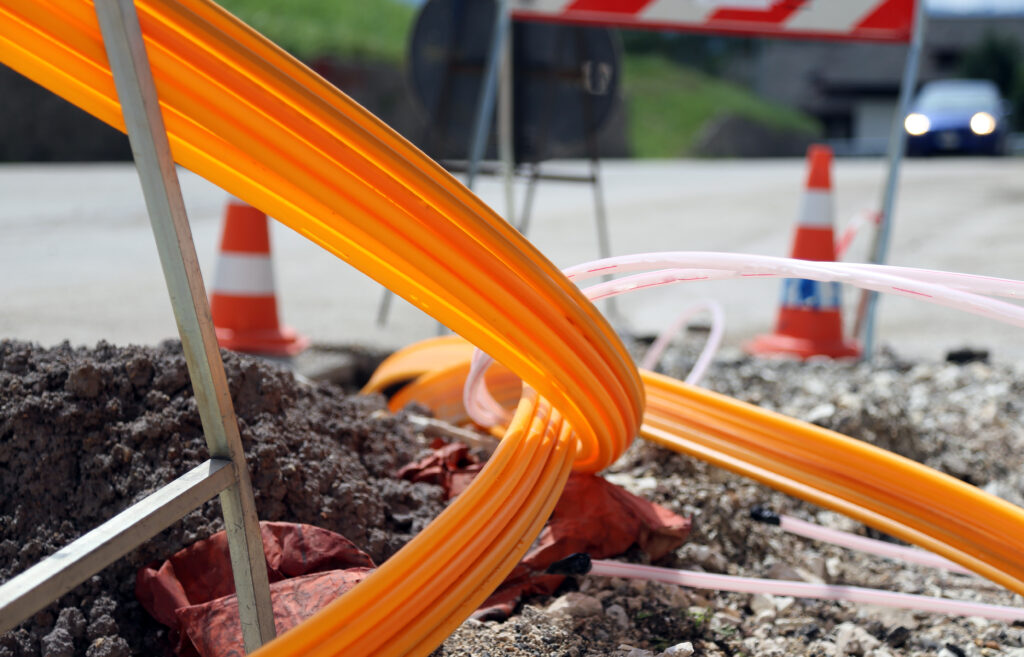
reduce installation errors, improve reliability, and maximize FTTH ROI.
Well-Documented Networks Matter for M&A Too
One trend we expect to continue across Europe and North America is heightened merger and acquisition activity in fiber. It is seen as an attractive long-term asset, whether that is a mobile operator acquiring fiber to support fixed-mobile bundling, an existing fiber player looking for scale, or private equity looking to exit. In every one of those scenarios, a well-documented, trustworthy network inventory makes the difference between a straightforward valuation and a drawn-out one, and between smooth integration and a messy one after the deal closes.
Mobile and AI Are Where This Is Headed
The PwC report identifies mobile GIS and AI-enhanced analytics among the biggest trends shaping the next era of utilities and telecommunications. Telecom operators and utilities alike are asking for more of their network inventory tools to move to mobile, and they want AI embedded into those tools, particularly for analytics. That is where I see the earliest and clearest use cases for AI in this space: not replacing the network inventory system, but helping teams get faster answers out of it.
What This Means for FTTH ROI
Put these threads together: coverage and take-up still have real room to grow, installation quality and fault rates are quietly eating into returns, a single source of truth measurably pays for itself, and it matters just as much when a network changes hands as when it is being built. The path to stronger FTTH ROI starts with knowing exactly what network you have, trusting that view across the organization, and building from there.
If your organization is working through what that looks like in practice, I would welcome the conversation. Visit VertiGIS ConnectMaster to learn more.
All Blog Articles